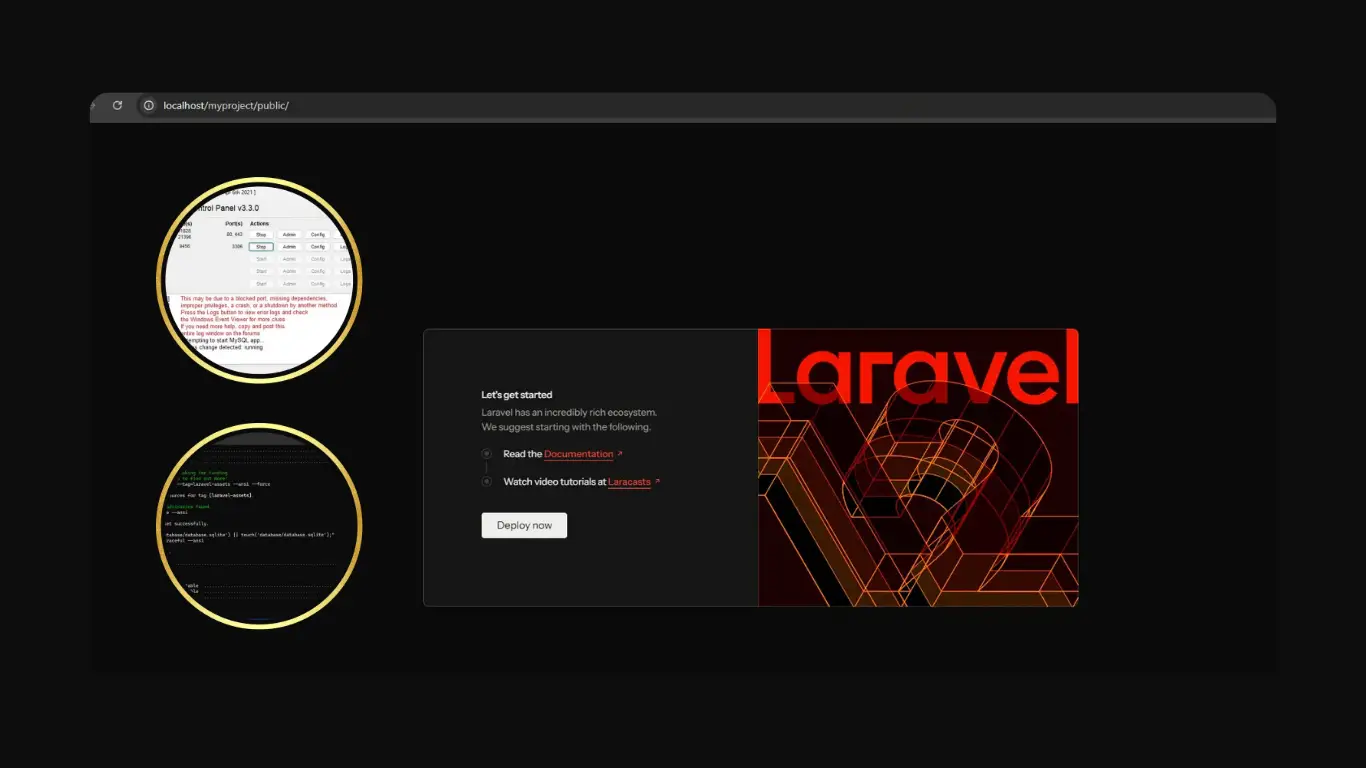

Entering into Laravel might be easy for you when you get started with it. You will only need to follow several tutorials and do a bit of routing to see that everything works out well for you.
However, with time, all that changes. Your projects become complex, your code becomes too long and your simple decisions may affect your progress in a negative manner. At that point, one starts realizing that learning how to create something with Laravel requires knowledge of how to structure it properly.
It turns out that there are several things that every beginner is likely to make a mistake of doing during their early stage. They may go unnoticed by many and even tutorials will hardly mention them. Luckily, the correction of the problems is not too hard to handle.
Quick note
These mistakes are normal. Every developer goes through them. What matters is recognizing them early and improving step by step.
Putting Too Much Logic Inside Controllers
Controllers are one of the first concepts to be grasped when learning about Laravel, so it is easy to rely on them heavily. It makes sense to think that putting everything into one place is convenient and it allows you to work with request data, validation, DB operations and responses in one file.
However, after a while you find yourself with huge and unreadable controllers. For instance, implementing a basic functionality may result in a lot of code which is neither readable nor reusable.
The solution to this issue lies in keeping the controllers for request handling and delegating most of the logic to other classes. The introduction of even the most basic service class can do wonders.
Not Thinking About Structure Early
It’s easy to ignore structure in the beginning because everything is small. You add a few files here and there and it still feels organized.
The problem shows up later. Files start to spread across the project and it becomes harder to find things. You waste time looking for code instead of writing it.
You don’t need a complex structure from day one, but having a simple idea of where things belong can save you a lot of time. Grouping related files together is usually enough to keep things clean.
Using Too Many Packages
Laravel has a huge ecosystem, which is great. There is a package for almost everything. This makes it very tempting to install something every time you need a feature.
The issue is that too many packages can make your project heavy and harder to maintain. Some packages are not updated often and others add complexity that you don’t really need.
Before installing anything, it’s worth asking a simple question. Can this be done with basic Laravel features? In many cases, the answer is yes.
Copying Code Without Understanding It
That's how things always seem to work for me. You get your answer from somewhere online, copy it down, see that it works and go about your business.
However, after a certain amount of time when something doesn't work anymore, you'll have no clue what to do because you have not bothered to figure out what you were copying.
Just taking a few minutes to comprehend what the code means can save you lots of trouble down the road, although it may take more effort right now.
Ignoring Validation and Security Basics
In small projects, there is a tendency to overlook proper validation since all one wants is for everything to work.
In the long run, this will lead to unforeseen errors or even security breaches. The framework offers a simple approach to validation so there is no point of overlooking this stage.
The inclusion of basic validation at an early stage ensures that the project stays safe in the long run.
Not Reusing Code
Writing the same logic in multiple places might feel faster at first. You just copy and paste and move on.
After a while, this becomes difficult to manage. If something needs to change, you have to update it in several places. This increases the chance of mistakes.
Reusing code through small helper functions or service classes keeps things cleaner and easier to maintain.
Overcomplicating Simple Things
There comes a time when developers learn more complex patterns and begin applying them indiscriminately. This results in over-engineering and needless complexity.
It is not necessary for all projects to have multi-layered architectures. Some problems require simpler solutions.
Simplicity leads to a better understanding of your project and faster development.
Not Testing Features Properly
Testing tends to be overlooked initially. You will do the tests by hand and then go ahead.
However, as the development project progresses, this can become increasingly dangerous. Minor changes might cause errors elsewhere in your software and you wouldn’t even know about it.
However, even the most basic tests can provide valuable feedback and make you feel better about altering the code.
Losing Track of the Big Picture
It is so easy to get too caught up in the minor details that you may lose sight of how they all relate to one another. Once you fix one problem, another pops up making your project inconsistent.
Stepping away from your project for some time can help you gain clarity about the bigger picture.
At the end of the day
Mistakes during the process of learning Laravel are totally natural. You are supposed to do that and you need those to grow.
The most important thing here is to identify the factors that slow you down and change your approach accordingly. Small changes in the way you build things, understand them and simplify your logic may significantly impact the experience.
Learning Laravel is still very fun. The more effort you invest in building elegant and simple code, the better your experience with Laravel will be.